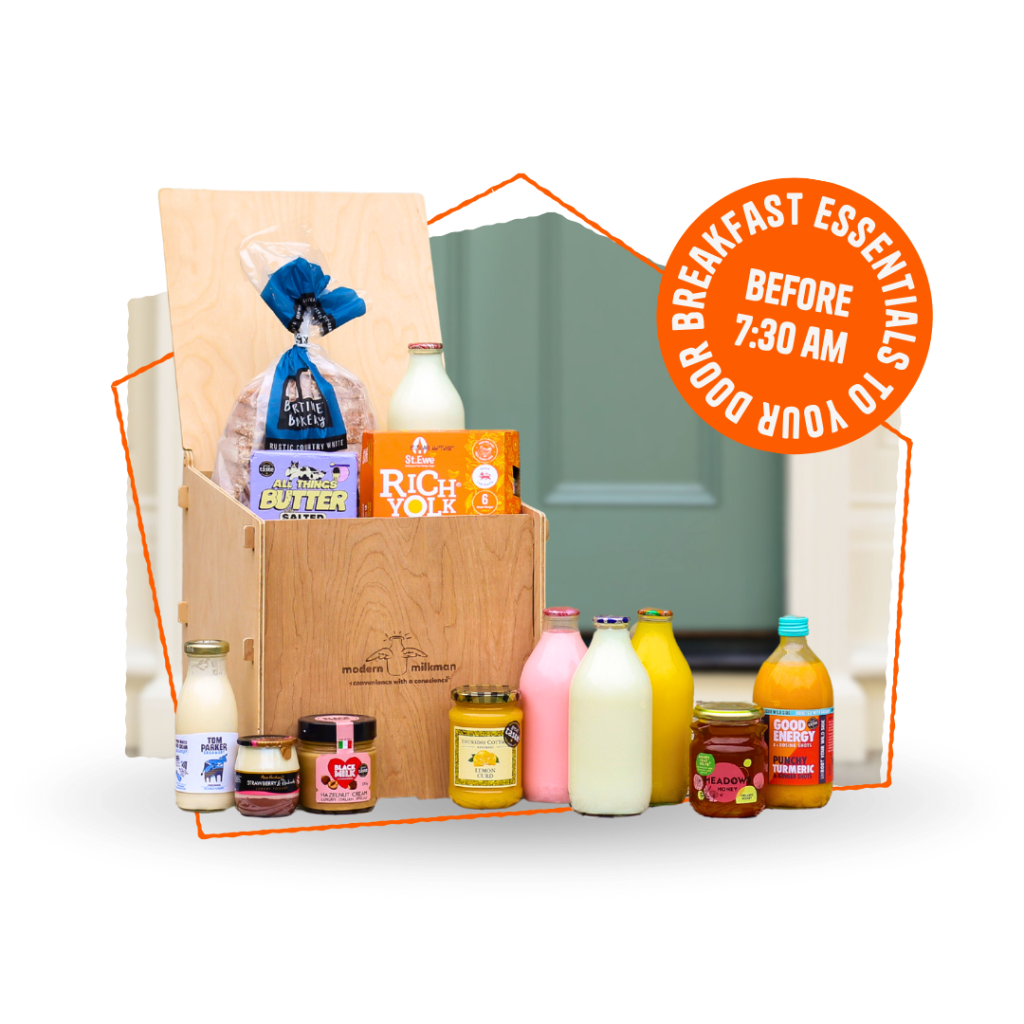
In the rolling hills and fertile valleys across Britain, a quiet revolution is taking root. Regenerative farming, a holistic approach that works with nature rather than against it, is transforming how our food is grown, one field at a time. At Modern Milkman, we’re privileged to work alongside pioneering farmers who are leading this charge, proving that sustainable agriculture isn’t just possible,it’s profitable, practical, and essential for our planet’s future.
But what exactly is regenerative farming, and why should you care about where your milk, honey, and berries come from?

Beyond Organic: Understanding Regenerative Agriculture
While organic farming focuses on what you don’t use (synthetic pesticides, fertilisers, and GMOs), regenerative farming goes several steps further. It’s about actively healing the land while producing food. The core principles include building soil health, increasing biodiversity, improving water cycles, and sequestering carbon from the atmosphere into the ground.
Think of it as farming that gives back more than it takes. Where conventional agriculture might deplete soil over time, regenerative practices actually improve it year after year. Where industrial farming often creates monocultures, regenerative systems celebrate diversity. It’s agriculture with a mission: to leave the land better than you found it.
Real Farmers, Real Innovation: Our Regenerative Heroes
Brown Cow Organics: Masters of the Mob
When you drive past Brown Cow Organics’ pastures, you might notice something unusual, hundreds of cattle clustered together in what appears to be a relatively small paddock, while vast stretches of grassland remain untouched nearby. This isn’t poor planning; it’s precision agriculture at its finest.
“Mob grazing” or high-density grazing is Brown Cow Organics’ answer to one of agriculture’s biggest challenges: how to raise livestock while actually improving the environment. The concept is elegantly simple yet scientifically sophisticated. Large numbers of cattle are rotated through small paddocks for brief periods, sometimes just a day or two, before moving on to fresh pasture.
The magic happens in what’s left behind. The cattle’s hooves create just enough soil disturbance to help seeds germinate, while their manure provides natural fertilisation. But here’s the crucial part: the grass isn’t grazed down to stubble. Instead, the mature grasses are only partially eaten, leaving a protective carpet on the soil surface that becomes a thriving ecosystem of bacterial activity.
This surface mulch is where the carbon capture happens. Rather than releasing CO2 into the atmosphere, the protected soil actually pulls carbon from the air and stores it underground. It’s a process that’s been perfected over millions of years by wild grazing herds, now carefully orchestrated by farmers who understand that sometimes the old ways were the best ways.
The trials haven’t always been smooth sailing. The weather makes it particularly challenging, too much rain and the cattle can damage the paddocks with their hooves. Too little, and the grass doesn’t recover quickly enough for the next rotation. But the results speak for themselves: steadily improving soil health, increased biodiversity, and milk that comes from genuinely happy, healthy cows.
We stock three, gorgeous tasting Brown Cow produce, Greek Style with Protein, Ginger and Strawberry Kerfir. These glass jars, are clean, practical and tasty.
The Honey Project: Every Jar Tells a Story


At The Honey Project, they’ve turned honey production into an act of environmental restoration with a simple but powerful promise: every jar rewilds 100 flowers. It’s a commitment that goes far beyond producing delicious honey, it’s about creating corridors of life across the British countryside.
Bees, of course, are the unsung heroes of our food system. These remarkable insects pollinate roughly one-third of everything we eat, from apples to almonds, strawberries to sunflowers. But Britain’s bee populations have faced unprecedented challenges in recent decades, with habitat loss, pesticide use, and climate change all taking their toll.
The Honey Project’s approach is refreshingly direct: for every jar of honey sold, they plant wildflower seeds specifically chosen to support not just honeybees, but the full spectrum of British pollinators, from bumblebees to solitary bees, hover flies to butterflies. These aren’t just any flowers; they’re carefully selected native species that provide nectar and pollen throughout the growing season.
The regenerative impact extends beyond the obvious. Wildflower meadows improve soil structure, prevent erosion, and create habitat for countless other species. They’re carbon sinks, water filters, and wildlife corridors all rolled into one. A single meadow might support everything from ground-nesting birds to small mammals, while its deep-rooted plants help build soil organic matter year after year.
But beekeeping in the modern world isn’t without its challenges. Varroa mites, unpredictable weather patterns, and the ongoing struggle to find unpolluted forage areas mean that even the most dedicated beekeepers face constant trials.
The reward, though, is honey that tastes of place,wildflower honey that captures the essence of a particular landscape, season, and moment in time. It’s regenerative agriculture you can taste.
Why don’t try both flavours and get them delivered in time for breakfast
The Berry Makers: Innovation Underground
While The Berry Makers might be known for their exceptional soft fruits, their real innovation lies beneath the surface, quite literally. In an industry where heating costs can make or break a business, they’ve pioneered the use of ground source heat pumps to warm their polytunnels, transforming how energy-intensive agriculture can become genuinely sustainable.
Ground source heat pumps work by tapping into the earth’s natural thermal mass. Even in the depths of a British winter, the temperature just a few metres underground remains relatively constant. The Berry Makers’ system extracts this stable ground temperature and amplifies it to provide consistent, efficient heating for their growing environments.
The environmental benefits are substantial. Traditional polytunnel heating often relies on gas or electricity from the grid, creating significant carbon emissions. The heat pump system, by contrast, can be three to four times more efficient than conventional heating methods, dramatically reducing both energy consumption and environmental impact.
But perhaps more importantly for regenerative agriculture, this approach demonstrates how modern technology can work in harmony with natural systems. The ground source system doesn’t deplete or damage the soil, if anything, the careful installation process often improves drainage and soil structure around the growing areas.
The journey to this innovation wasn’t straightforward, the initial investment was significant and a steep learning curve, but through trial and error the results have been transformative. .
Not only are their polytunnels more environmentally friendly, but the consistent, controllable heating has actually improved crop quality and extended growing seasons. It’s a perfect example of how regenerative farming isn’t about going backwards, it’s about using the best of both traditional knowledge and modern innovation.
The Trials and Tribulations: Why Regenerative Farming Isn’t Easy
While the benefits of regenerative farming are clear, the path isn’t always smooth. These pioneering farmers face unique challenges that their conventional counterparts might not encounter.
Financial Pressure: Transitioning to regenerative methods often requires significant upfront investment—whether it’s fencing for rotational grazing, heat pump installation, or simply the cost of reduced yields during the transition period. Many farmers are essentially conducting expensive experiments with their livelihoods at stake.
Knowledge Gaps: Regenerative farming is as much art as science. While the principles are well-established, every farm is different. Soil types, climate patterns, local ecosystems, all require farmers to become students of their own land in ways that simplified industrial methods never demanded.
Market Uncertainty: Consumers are increasingly interested in sustainable food, but they’re not always willing to pay the premium that truly regenerative products command. Farmers often find themselves caught between doing what’s right for the environment and what’s economically viable.
Weather Extremes: Climate change means more unpredictable weather patterns, which can be particularly challenging for farming systems that work closely with natural cycles. A late spring frost or an unusually wet summer can derail carefully planned rotations or destroy crops that might have survived under more controlled conventional systems.
Regulatory Hurdles: Current agricultural policies and regulations are often built around industrial farming models. Regenerative farmers sometimes find themselves working within systems that don’t recognise or support their methods.
The Ripple Effect: Why Your Choices Matter
When you choose products from regenerative farms, you’re not just buying food, you’re investing in a vision of agriculture that builds rather than depletes. Every pint of milk from Brown Cow Organics represents grassland that’s getting healthier each year. Every jar of honey from The Honey Project means 100 more flowers adding beauty and biodiversity to the landscape. Every punnet of berries from The Berry Makers demonstrates that innovative farming can be both productive and planet-friendly.
These choices create a market signal that encourages more farmers to make the transition. They provide the economic stability that allows farmers to take risks and experiment with new methods. Most importantly, they demonstrate that sustainable agriculture isn’t just an environmental necessity, it’s a viable business model.
Looking Forward: The Future of British Farming
Regenerative farming represents more than just a different way of growing food, it’s a fundamentally different relationship with the land. It recognises that healthy ecosystems and productive agriculture aren’t opposing forces but natural partners.
The farmers we work with are proving this every day. They’re showing that it’s possible to produce exceptional food while building soil, supporting wildlife, and sequestering carbon. They’re demonstrating that innovation doesn’t have to mean industrialisation, and that working with nature often produces better results than working against it.
But perhaps most importantly, they’re creating a model of farming that future generations can actually sustain. In a world facing climate change, biodiversity loss, and soil degradation, regenerative agriculture offers a path forward that addresses multiple challenges simultaneously.
The revolution happening in British agriculture might be quiet, but its impact will be profound. Every mob-grazed pasture, every rewilded meadow, every heat pump-warmed polytunnel is a step toward a food system that works for farmers, consumers, and the planet.
As we look to the future, one thing is clear: the farmers leading this charge deserve our support, our recognition, and our business. They’re not just growing food, they’re growing hope.